
Look within for value,
but beyond for perspective

I am working on writing and idea prompts for a future gathering. How do you describe what you do? I never say artist. Maybe writer or depending on the inquisitor I will talk about being a geospatial data scientist.
Definitely a public speaker or keynote speaker but when I think about how I build big conversations, it begins with art. Always has. Perhaps in the beginning I would point to a figure from a medical journal and want to hop right in describing the statistical underpinnings.
Once I got more road on my tires I realized I was doing it all wrong. People i.e., audiences want to be relaxed and feel that they are in a safe space to learn. Slowly I began navigating the saucy line between perception and perspective revealing much more than scribbled bar charts or line graphs.
Art allows you to do this in real time.


art.object.story
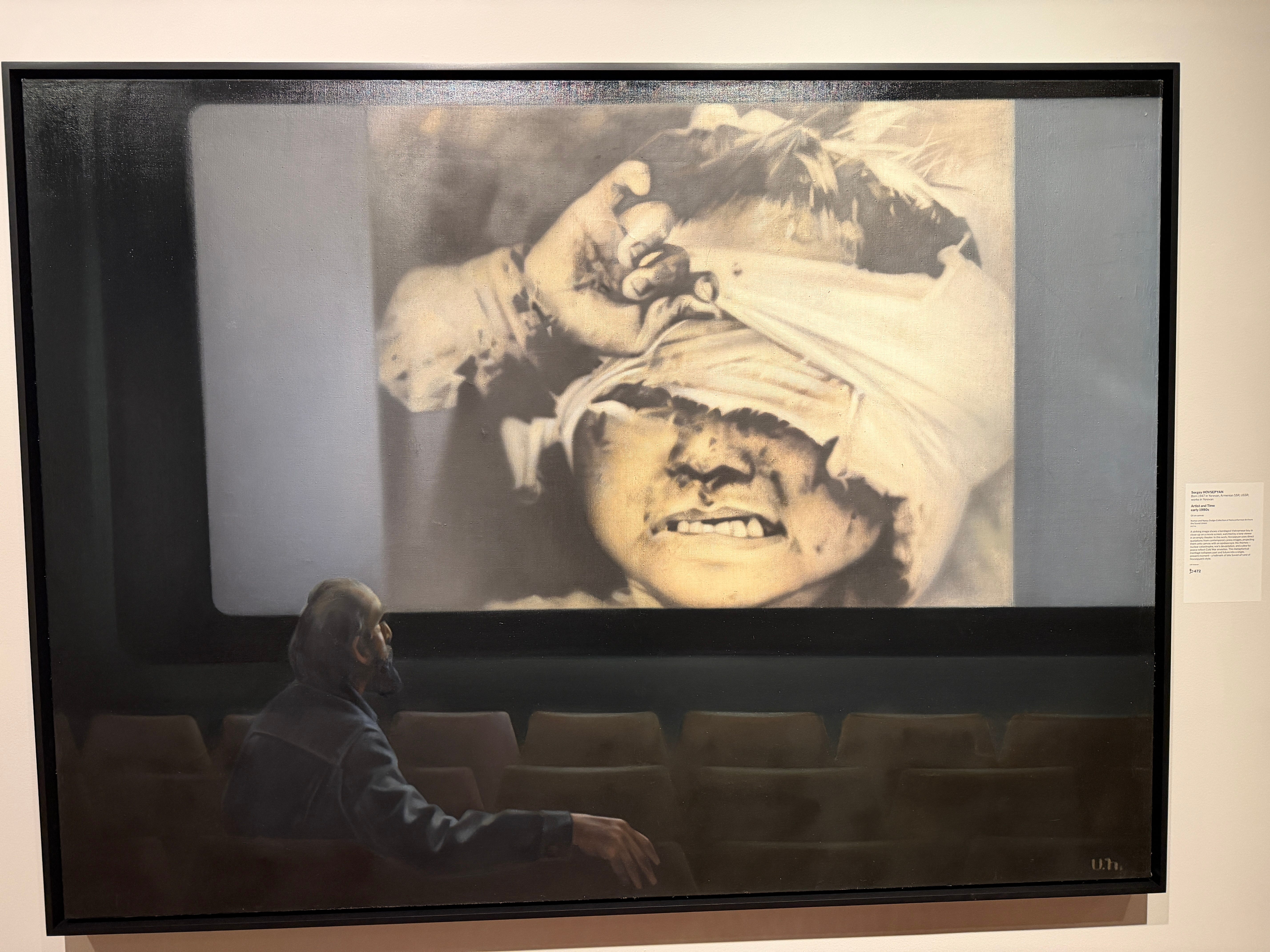
Here is the invitation. We are going to build stories together. Beginning with an object which can be a physical object like a photograph, piece of art, or even something as ethereal as a memory we can reimagine them – art as words.
These fragments can be catalysts for establishing a writing life or creativity at large.
I am a geospatial data scientist. Geospatial data science focuses on spatial intelligence and location. Peel away the gobbledy gook and we are fundamentally talking about “place”.
There is a saying coined by mathematician Alfred Korzybski, the map is not the territory. Pretty heady commentary to a room full of cartographers and analysts. The equivalent of debunking myths like the tooth fairy or Santa himself.
What we mean is, you can create, observe, or hold a physical map in your hands or on your phone and that’s all there is. Extrapolating what you see confined to the limits of your perception is not what that place feels like in real time.
A map is a reduction of a reality and just by the nature of the limits, important details are often left out. How you see things isn’t how things actually are.
Our storytelling can close these gaps. Think of a map as a piece of art. Honestly the first graphic visualization we explore is likely a map.
Now let’s explore the patterns, textures, topography, color etc. We are now holding an object.
My perception is unique to my lived reality. My story will be different. Now if we accept an invitation to engage with other lived realities – stepping outside our worlds – now we can experience different perspectives.
This last image is reserved for a scheduled discussion but I invite you to share your thoughts.
The art of impactful storytelling. Often a stepping stone for radical empathy.
You must look within for value, but must look beyond for perspective. Denis Waitley, American writer